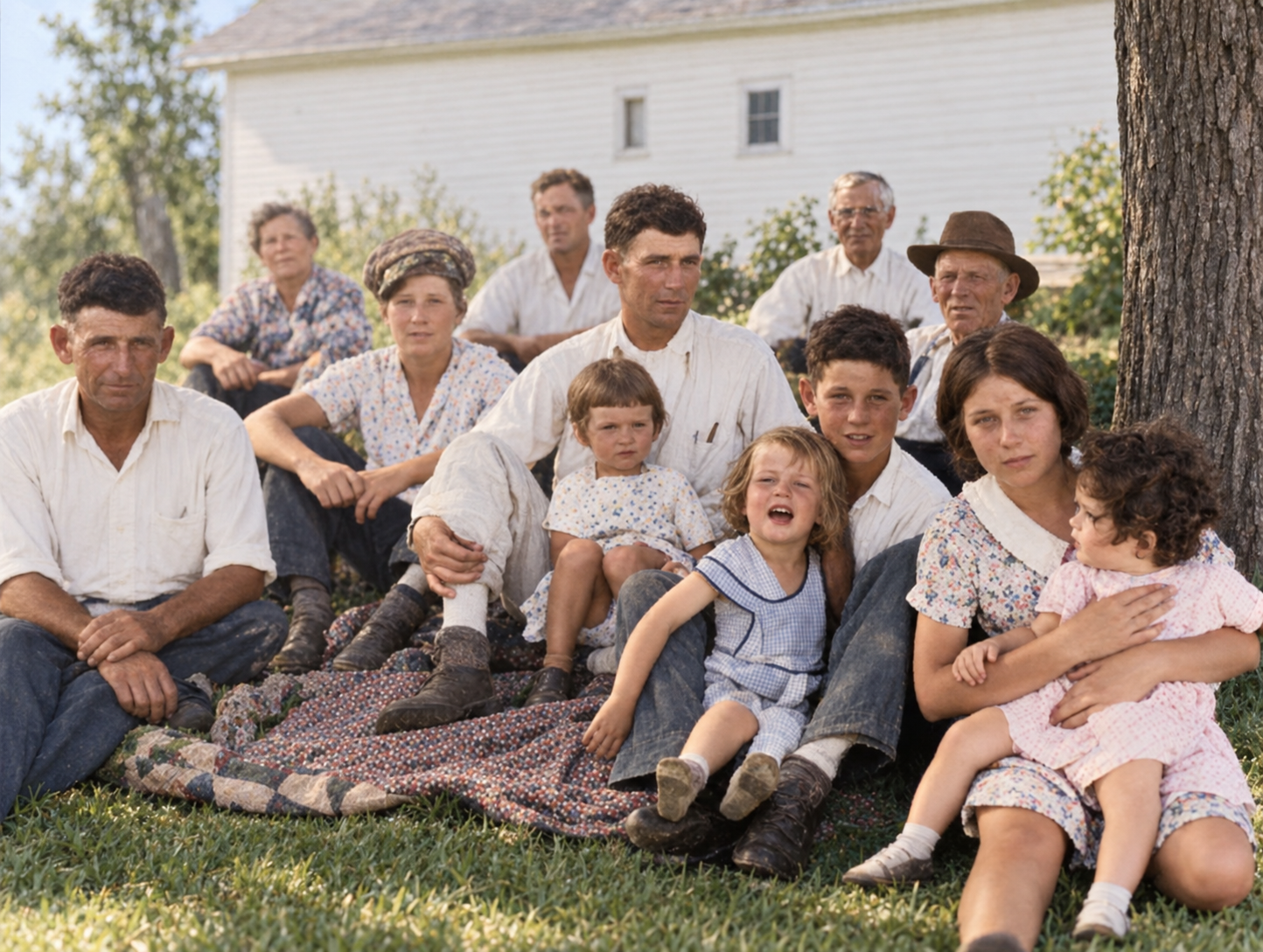
This is a special picture to me, despite its faded quality. The years have taken their toll on this photograph, but my memory of that time is still clear. My sister shared this picture with me several years ago from her collection of family memorabilia. I’m the wiggly little boy with the dirty feet that my older cousin is trying to contain, so my mom can take this picture with her Eastman-Kodak box camera. Rule number one back then for pictures: everyone hold still.
This picture dates back to 1939; nearing the end of that dust bowl and depression decade and just before the beginning of World War II. It represents an era of families and the kind of family farms that are now virtually extinct. The people in this picture were most of my universe. My universe also included my mom, Aunt Mary, Aunt Mary Agnes, and my two cousins Mary Catherine and Wayne, not in this picture. It’s the only picture I have that contains both my Grandpa Raftery and my Grandpa Smith, the two old men sitting in the background at the upper right.
My cousin Hayward (holding me) and my cousin Earl (in the aviator cap) would leave the following year to join the Navy. They returned after the war, but not back to life on the neighboring farm in Western Illinois where I thought they would always belong.
My dad and my brother John are the two faded figures over Earl’s right shoulder; the rest are a mix of siblings and uncles and cousins visiting on a summer Sunday afternoon after dinner. My mom must have had them gather under the big maple tree in our front yard for this picture; taking a picture like this was a special event that she fussed over with as much care and concern as she did preparing the Sunday feast we had just enjoyed.
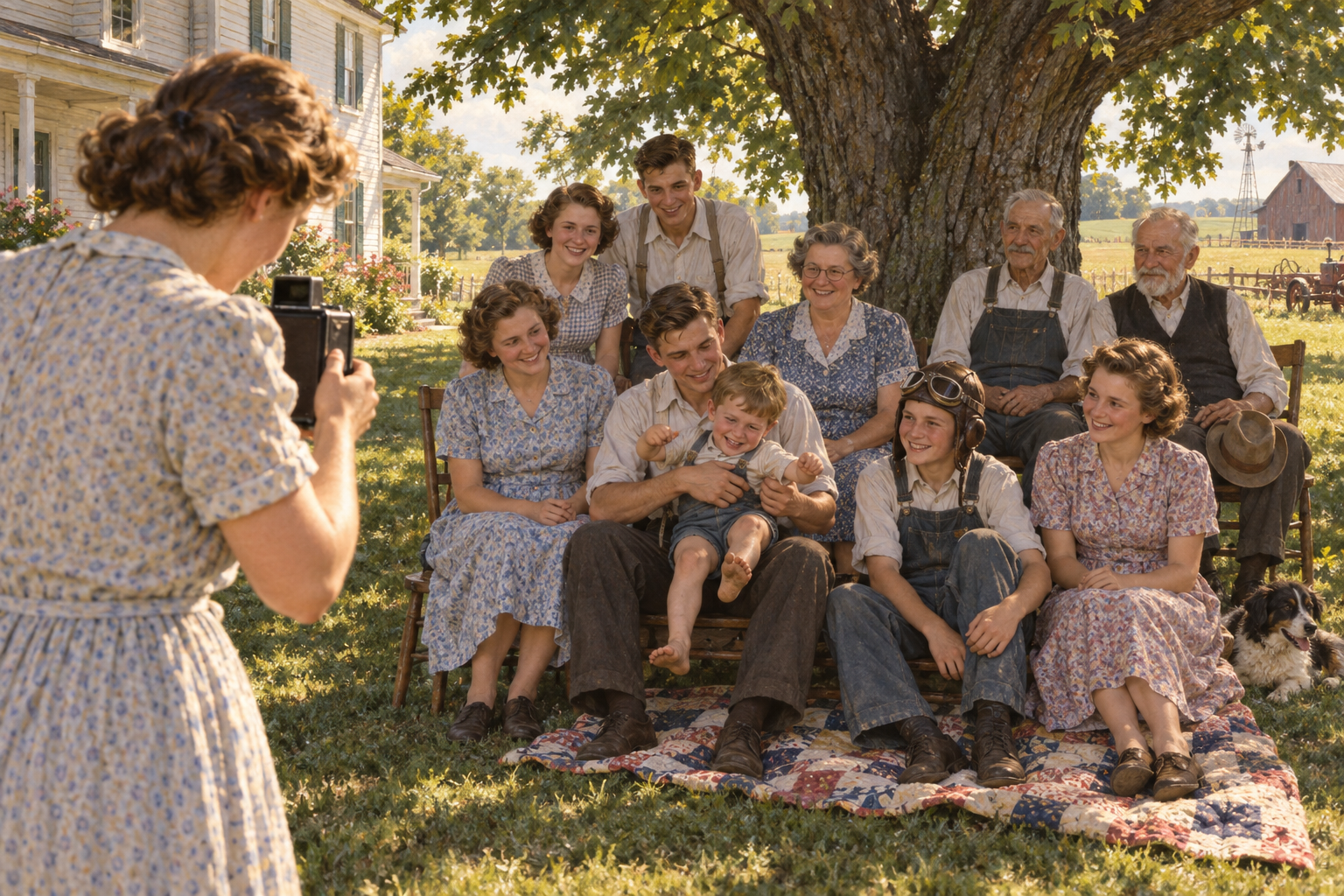
My dad and my uncles were farmers. In that era being a farmer meant managing a variety of crops and a large menagerie of animals. Farms were home to hogs and cattle; sheep and horses and cows populated the pastures. In addition to corn and beans, the land produced hay, wheat, oats, large gardens and miscellaneous fruit trees. Most farms featured a barnyard full of dogs and cats, chickens, tractors and wagons, and an assortment of machinery, as well as barns and granaries and sheds. Outbuildings still populate the country- side today, although most are abandoned and decaying.
Let me return to the moment described by my picture. The combination of a blanket to rest on, a soft breeze through the leaves as background to quiet conversations, and a full stomach from our Sunday fried chicken dinner was a good definition of contentment for all of us. Most Sundays were a welcome rest from the other six days, truly “keeping the Sabbath”. However, when crops had to be harvested or when weather caused delays in planting crops or putting up hay, Sundays could be as busy as any other day.
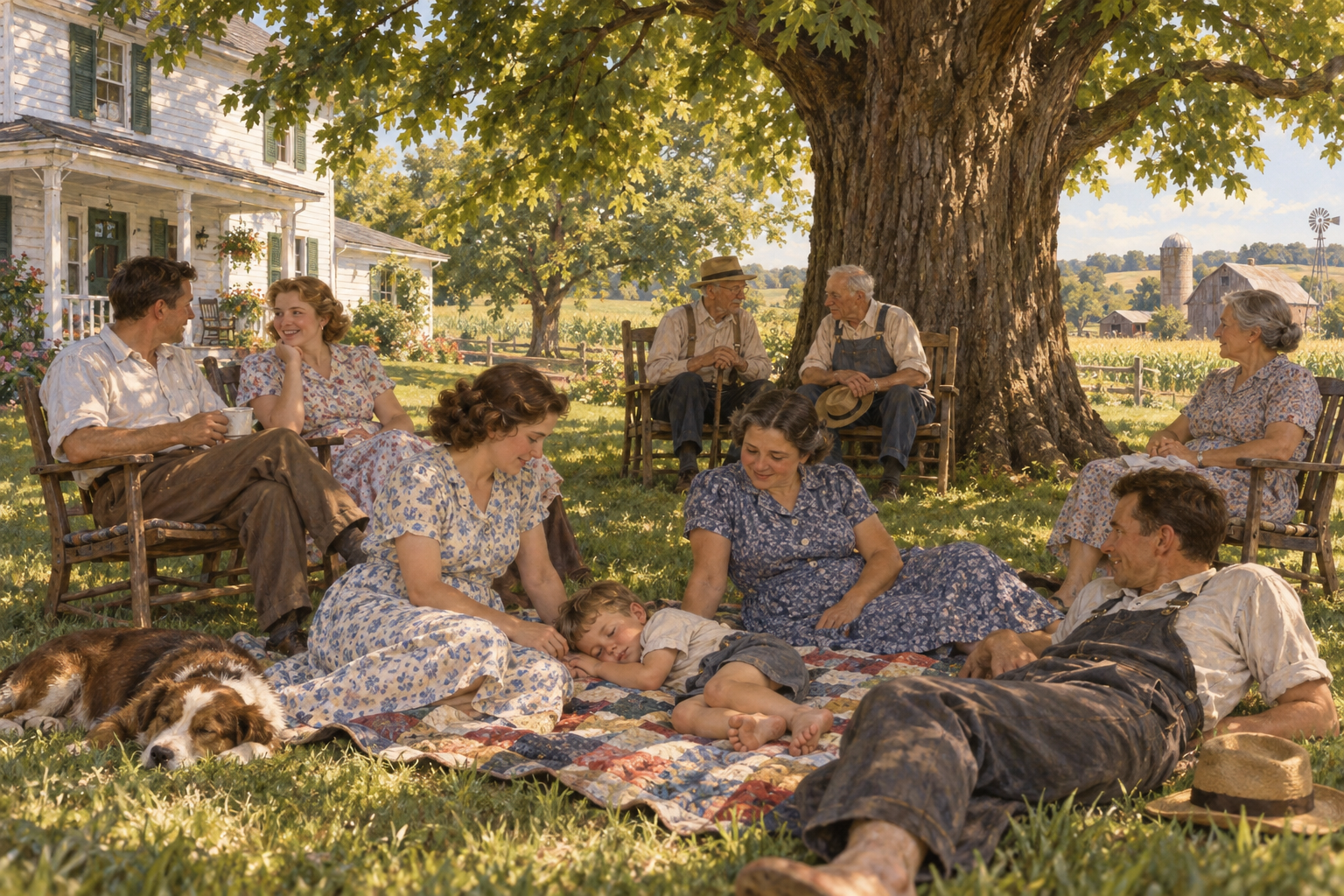
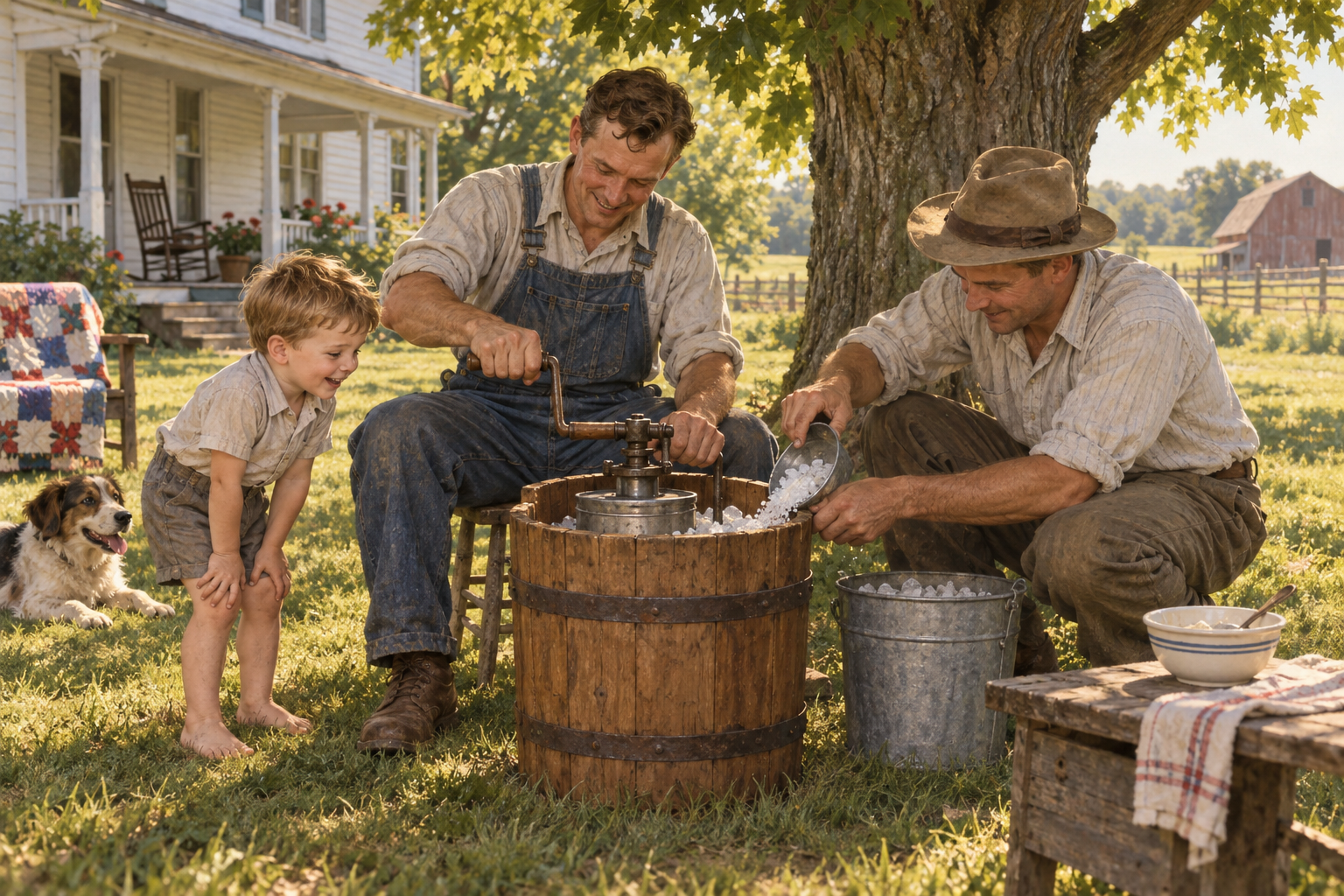
When no one wanted to chase after me any longer and the topics of weather and crops and livestock prices dulled my senses, a nap would creep up and capture me. An hour later I might be roused by the sound of a hand-operated churn being turned by my Uncle Loren to make ice cream. Uncle Mike would monitor the ice packed around the churn, adding salt to the ice and making sure the melting ice water did not rise enough to invade the precious container of ice cream in the making. The taste of home-made ice cream was the best cold food ever, just as home-made bread right out of the oven was the best hot food ever.
Later, as the shadows lengthened across the yard and the day eased toward dusk, the quiet murmur of those “and one-more thing” subjects, forgotten until the last minute, accompanied the departure of everyone. I always hoped that they were planning to gather the next Sunday, so we could celebrate belonging to one another all over again.