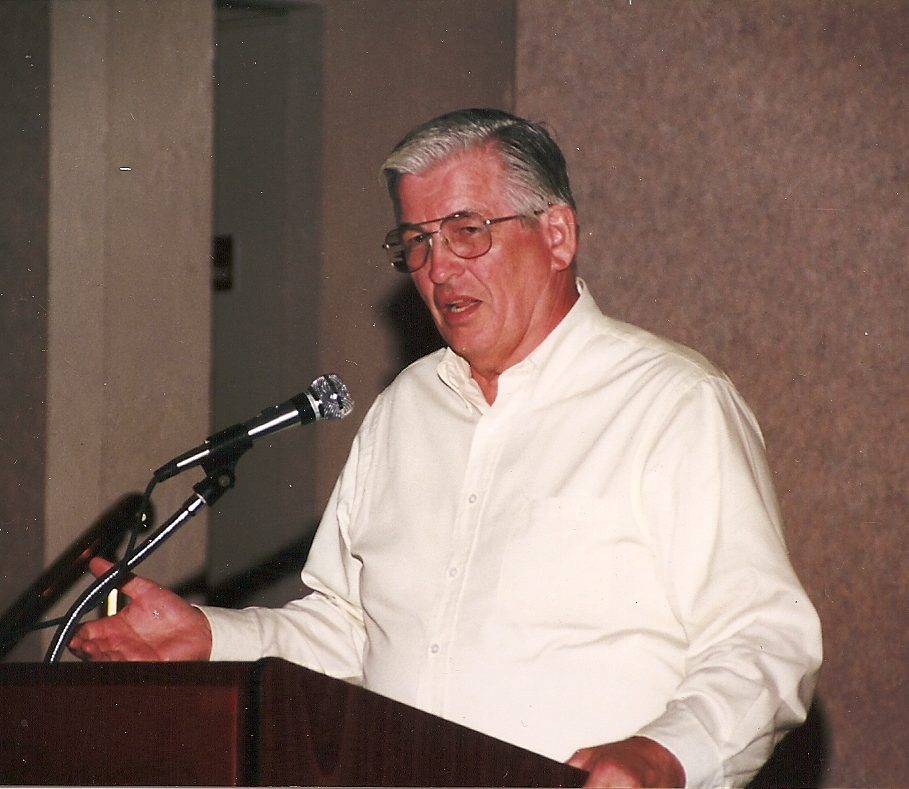
I’ve previously described the serendipitous events that occurred in the fall of 1958 during my “employer selection process” (yes, the job market at that time meant many engineering graduates got numerous job offers). I spent 1959 in the Agricultural Engineering Graduate School at the U. of I. and came to work at Caterpillar in 1960. The following is a brief history of the next forty-one years.
I walked in the door at Caterpillar on Monday, July 25, 1960. I believe the building I entered is one of the few still standing in East Peoria today. I spent my first year in a College Graduate Training Program, long since replaced by a brief period of orientation lasting only a couple of weeks. I hired in with the understanding that I would be granted time off (without pay) for one week in September to get married. My starting salary was a whopping $680.00 per month! Management learned about my graduate work for an advanced engineering degree, so they raised my salary to $730.00 per month - not bad. Our first apartment was $90.00/ month and gasoline was 29 cents/gal. That first paycheck made Jan and me feel wealthy.
I enjoyed the training assignments and realized for the first time what a real job was like. It was a new experience for me: getting to work on time every day, lunch breaks, multiple assignments, working with many people, meeting deadlines, reporting, and the general work environment. Until then my job experience had been weekend yard work, meal jobs, part-time work at the Agricultural Engineering Department at the U. of I., and, of course, my experience of working on the family farm. I’d never had an internship or summer job in industry like the prevailing mode of job experiences today (discounting the present recession-related curtailments). That training program year was a series of six-week assignments at various locations around the Research Department, including design engineering assignments in the East Peoria plant, laboratory-based assignments in Building W (the heart of the Research Department), and a couple stints at the Peoria Proving Ground, where I fell in love with operating the earthmoving equipment.
Probably the most demanding training assignment I had was designing a set of gears in the East Peoria Engineering Department where I compressed the six-week assignment into five weeks to allow a week for our honeymoon. I completed it on time! The feature I remember most about that large room full of people was a giant drafting board that filled one side of the room. It was reserved for special assignments. It was a sign of prestige to be allowed to work at that board, and I never did.
After our honeymoon I spent the next six weeks at the Proving Ground operating machinery. There were very few new technical topics to absorb, but I worked hard to gain some modest proficiency operating the machines. I think the machine line demanding the most skill was Motor Graders. My farm machinery background served me well. I was not intimidated like some of the other new engineers who had never been around equipment like this before. This was a very good time other than getting a lot of hazing and embarrassing questions about my life as a newlywed.
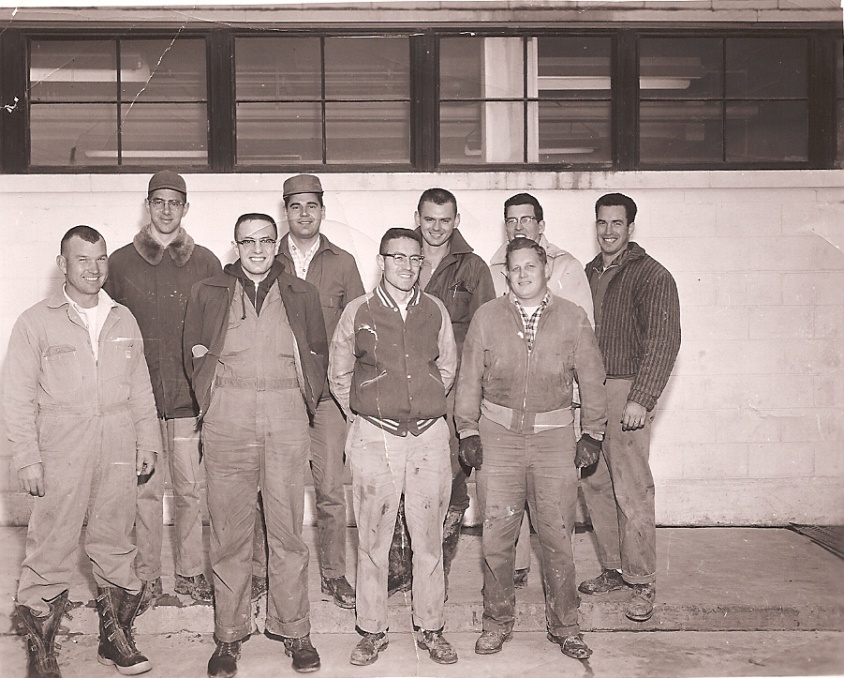
I won’t recite all the assignments of that first year, but it turned out differently than I had anticipated. I had joined Caterpillar Tractor Co., as it was officially called in those days, with the expectation of being assigned to a Structures Division that tested and developed frames, axles, linkages, engine blocks, and assorted structural components. However, my stay in the Vehicle Components Division was so interesting that I asked to be assigned to that area instead.
I really enjoyed the people that I was assigned to work with: a Supervisor by the name of Gordy, and a Test Engineer by the name of George. George took me around to show me “how things worked”, meaning how to get things done. Gordy gave me a technical assignment, working under George’s tutelage, to test a hydraulic valve (which I won’t try to explain here) and get it to shift properly. I loved it! By the time that six-week assignment was over I went to the manager of the training program and expressed my desire to be placed into the Vehicle Components Division instead of the Structures Division, and he granted my wish.
My first Division Manager, Harold, had a “bull-of-the-woods” style, and I think he tried to intimidate me the first several years that I worked in that group. Standing about 6’2”, Harold had a large “Babe Ruth” torso on spindly legs, thinning red hair, and a quick temper. His “direct reports” (those working directly for him) feared him, and the engineers who couldn’t write to suit him and those who were chronically slow in submitting reports disliked and feared him. Harold showered too much attention on some of the underlings who were merely brown-nosers, in my opinion. His temper generated a raised voice and a tremble in his hands as he harangued us. My performance reviews began to take on a familiar pattern after a while. Harold would ask me “Where do you see yourself in the future?” I would often say, “I’d like to have your job.” This irritated him, but he would smile at my naïveté. My question to him was often “What’s the key to success for me?” and his answer was always the same: “The best way to get ahead is to do your very best on your present assignments.” So we were at a standoff, without any real communication. But he was the boss.
One reality that I came to grips with was the attitude of the hourly workers in the local union. I had never been around employees other than hired hands on the farm, and hardworking kids “bucking bales” or working for the Gerard Brothers Trucking Company hauling hogs to market or driving grain trucks. I experienced the culture shock of working with union employees who seemingly had an “us against them” prevailing mindset. I never asked many questions to learn the history of how this tension between union and management evolved over the years, but in 1961 it was palpable. Not all workers were the same; many would quietly go about their assignments without complaint, while others would try to make a game of seeing how little they could do. The problem seemed to me to be an issue of trust and respect. Management created an atmosphere that was “just do what you’re told,” so the workers resented this and gave their allegiance to their Union Steward.
The problem was more complex than I can explain here, but this is what it looked like to me back in 1962. I learned however, to take time to explain as exactly as I could, not what I wanted them to do, but what I needed to create in the way of a test stand or hydraulic circuit… and let them suggest how they thought it ought to be constructed. The time I invested with an individual, listening to his ideas and to any other gripes or insights he was willing to offer yielded, if not loyalty, at least cooperation.
Over the next several years I labored in the laboratory and loved it. The most demanding part of the job was reporting. This was a humbling and painful experience, made more so by Harold. He would take personal offense at a split infinitive or dangling modifier. We engineers, including our immediate supervisors, would presume that the importance of our ideas or recommendations to the design personnel and supplying solutions to their technical problems should buy us some tolerance for an average effort at reporting our work. But not so with Harold; he was tyrannical about the report. It had to be right, and if not you would have little hope of advancement in his domain. I learned good technical writing from him, but Harold could always find something to improve. Good technical writing was to make statements so clearly and correctly that the reader could not misinterpret what you wrote. Unlike poetry or some prose, there could be only one way to interpret the message.
I enjoyed the most creative period of my career in that Vehicle Components Division during the 1960’s. I’ve since tracked down nine patents with my name on them and could have had my name on several others, but I didn’t see that as a big deal at the time. The most interesting aspect of the work was the diversity. I worked on transmission controls, high-pressure hydraulics (accumulator charging valves, brake control valves, flow divider valves) tire testing, seat suspensions, steering control systems, brake systems, and antiskid brake controls. I had my share of failures and mistakes, but in general the work was very rewarding. I got to see many of my ideas and product improvements “put into iron.”
Nine Patents
A list of most of Don’s patents.
| Patent # | Date | Subject Title |
|---|---|---|
| 3,174,500 | March 1965 | Snap Acting Accumulator Charging Valve |
| 3,390,735 | July 1968 | Steering System for A Two-Tractor Vehicle |
| 3,395,946 | August 1968 | Hydraulic Brake Circuit for Dual Vehicles |
| 3,539,228 | November 1970 | Pressure Control Valve |
| 3,547,234 | December 1970 | Dual Brake System for Vehicles |
| 3,565,492 | February 1971 | Automatic Safety Brake System |
| 3,669,513 | June 1972 | Braking Circuit with Pressure Control Valve |
| 3,938,770 | February 1976 | Hydraulically Suspended Vehicle Seat |
| 3,953,082 | April 1976 | Antiskid Brake Control System |
During the 1960’s I made my first trips “into the field” to see the products at work, placing components and systems on machines for firsthand demonstration of their reliability and worthiness. My travels over the years were associated with product as well as component and system development, taking me to all four corners of the contiguous states. I traveled from Maine (north of Bangor in the woods following a log skidder) to Southern California (the Imperial Valley with the first Challenger… belted Ag Tractor… prototypes) to the forests on Vancouver Island (following a hydraulic excavator equipped for pioneering work) to the Florida Keys (undercarriage wear studies in that very hard abrasive sand).
There were lessons to be learned about visiting a job site. First, the people in the field set the priority in terms of topics to be discussed. If my objective was to talk about the operation of a wench on the tractor but the tractor was in the shop with undercarriage problems or a transmission failure, I’d better be ready to listen to the shop superintendant’s complaints and questions on those topics before raising my topic. Secondly, the moment you showed up on a job as a “man from the factory,” you were fair game for any topic or complaint the owner or operator had on his mind at that moment. You’d better listen to him and usually admit you did not know the answer to his questions but promise to follow up. Then you had better follow up so the next time on a visit to the same jobsite you would be much more, well, if not welcomed, at least tolerated. I experienced long hours and anxious moments, but I always returned to my familiar Caterpillar environment re-energized and re-motivated.
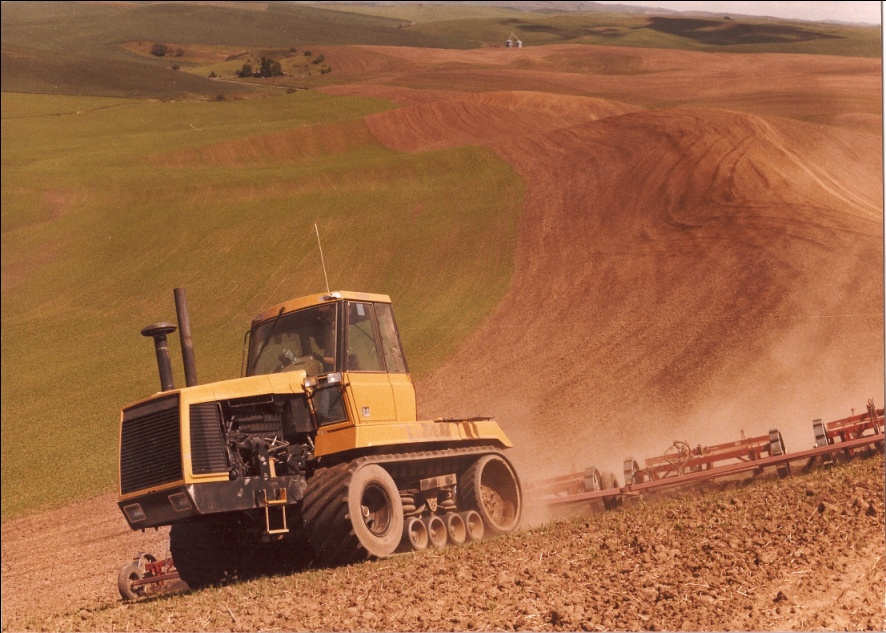
I learned about the importance of reliability from a young man who had purchased his first Caterpillar machine (a track-type loader that he reminded me he paid a premium for compared to the competition). He described in a sincere and worried way the gamble he had taken on bidding on the job he’d been awarded. He would lose his machine and his effort to begin an independent business for himself if the loader had any down time. It had to work all day every day, or he and his wife and two kids would be moving back in with her parents and he would be looking to go back onto another contractor’s payroll. This hit home in a way that the impersonal numbers and metrics about reliability could not. I always wished that more of the employees content to stay “at home” had more opportunity to see the “real life” surroundings of our products in the hands of people like this man.
My eventual move to the Vehicle Engineering Design Group was a result of my own initiative. I was slow to notice how people moved in management ranks. Seldom did anyone advance straight up the line, but always to the side and then up. By 1971 I had reached the status of Project Engineer, right below Supervisor, so I went to my boss and said, “I want you to help me find another assignment. I need to move.” By then my first Supervisor Gordy had transferred to Joliet Engineering and then back to Vehicle Components, replacing Harold as Division Manager. His experience was evidence to me that to advance I needed to move, not wait for a “direct upwards” opportunity. My choices were an assignment to a test division related to engine development or an assignment to a design group called Vehicle Engineering. I chose design and was assigned to do new vehicle concept work.
I spent the next two years totally out of my element. I hated the daily reminder that I had no talent for mechanical drawing or aptitude for design disciplines. I was at a level as a Project Engineer where no one wanted to embarrass me by treating me the way they should have as a novice, giving me a set of simple assignments with close attention. Instead I sat in front of a drawing board staring at a few lines I’d add each day to a concept machine. By noon I’d escape to the Research Library and read magazines.
I felt like a technical leper. The manager was an older gentleman who sensed my frustration but had no time for me. I wasn’t going to do any harm, but I was of no value to him either. I was largely ignored by my peers and shunned by others who knew they contributed more to the division than I. I’d see a general supervisor walk past me, and to him I was invisible. I promised myself then that I would never do that to anyone if I was ever in his position… but worried that my move was destined to end my career.
There was no promise that this would lead to any promotion and I felt abandoned. Once, after I’d been there about a year Gordy called me and asked if I wanted my old job back, under the pretense that some increased workload necessitated the call. I said, “No, Gordy, I’m still holding out hope for a supervisor’s assignment. Please don’t forget me, but I’ll hang in here for now.” Gordy had probably gotten an informal report from my new manager of my dismal performance. A second year went by before a message came that Gordy wanted to talk to me. The rumor mill had picked up the trail before I received the message to go talk to Gordy. My Vehicle Engineering project engineer peers were in a state of shock and disbelief. Sure enough, Gordy was offering me the job I had been praying for; in fact better than I had expected! It was to supervise the Transmission Lab, the most prestigious of the sections in the Vehicle Components Division. The present supervisor was being transferred to the Proving Ground, and I was replacing him.
I went from doing virtually nothing to an overwhelming workload with fifteen or twenty (I don’t remember now) employees. I had to learn the technical programs sufficient to discuss them with my people as well as their counterparts in the Design Groups in East Peoria Engineering. New subjects like friction materials, torque converters, transmission controls, transmission designs for new machines, oil technology… endless issues came up daily and I loved every minute of it! I regained my old technical confidence that had lain dormant for two years, and I was soon recognized as very capable by upper management (who had questioned Gordy on his selection of me as his supervisor - feedback Gordy gave me some years later).
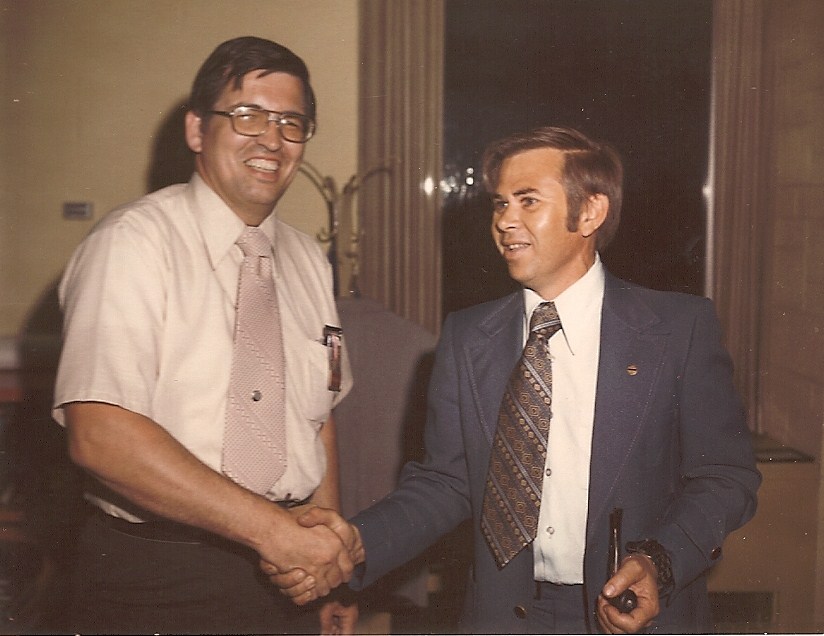
Most challenging and gratifying was the new experience of managing and guiding people. For the first time I had direct reports, including a couple people who naturally thought the job I got should have been theirs. I learned to be a good listener. When I had to be forceful, I could do that too, but I think I was always fair and I made sure that no one got ignored. Much of my time and energy went into understanding not only the technical issues but also the individual personalities that surrounded me. For example, I had one person with an alcohol addiction, another person who came to me one morning to confide that the night before she had been a rape victim, a man who took such strong medicine for seizures that he could hardly stay awake some days, and another who was in the throes of a divorce that had depressed and debilitated him. All these were new experiences to me, but I relished the opportunities to listen and try to help people find their own solutions to their own problems.
I was still self-consciously straightening out my new desk that first day on the job when a very angry technician came up and sat down beside my desk and in a loud voice asked, ”What does it take to get ahead around here?” I thought to myself “What is this about, did someone put him up to this?” But his anger was genuine. I hardly knew his name, but I managed to take the “answer a question with a question” approach, and in the process he began to give me the background to his remark. It became clear that he was frustrated by the poor communication between himself and the project engineer he worked with. As a result I had to have a very pointed talk with that person. I had a lot to learn about supervising people, but I think my instincts were good from the start.
In August of 1978 I was transferred to the Peoria Proving Ground and spent the next seven years having more fun. I was not developing components now, but the whole machine! I had a new set of people to work with, including a boss who thought I was a smart-ass from the lab (I probably was, a little bit). Part of my new job was being a spokesman for the engineers assessing the” readiness for production” of various new products There were some stressful moments and conflicts between the design groups from the plant responsible for the product, that wanted to go into production, while we still identified some high-risk problems not yet solved. My main fault was not being diplomatic enough at times.
Some of the engineers at the Peoria Proving Ground were lacking in the social niceties. Many were (or thought themselves to be) acknowledged experts on certain machine lines. They often used their expertise as an excuse or rationale to neglect some other basic criteria of the job, like reporting their results in a professional and timely manner. They might even be called on to go to some high-level decision-making meetings to report their assessment of a situation that could determine the outcome of a program, and they would appear with an unkempt appearance: dirty fingernails, hair uncombed, a generally disheveled appearance. Apparently their assumption was that their expertise trumped all other factors including simple hygiene.
I tried with limited success to convince them that they did not get a pass on basic deportment because of their expertise. I called it the “short stave in the barrel” phenomena; their potential would be limited by an unacceptable practice, which they thought their expertise allowed them. My analogy was a barrel that could hold only as much water as the shortest stave allowed, no matter how long their “expertise stave.” Some took my advice and it paid off for them. Others spent their career at a level below their expectations. They would never accept that if they could not be relied on to meet deadlines, report in a timely manner, and be effective on a team with others, their “expertise stave” was not going to offset their “short staves.”
After seven years at the Proving Ground, I decided in 1985 that I needed to move on again, and with the help of another mentor, I landed in East Peoria Engineering supervising a section with transmission design responsibilities. I could finally accept supervising people who could do things that I couldn’t do. It was humbling but not paralyzing, like my first experience in design had been. I had finally reached a point where I listened, asked questions, and could tell pretty quickly who the real leaders in a group were and who were the slackers.
This short stay was rewarded by a job offer that was the most challenging milestone of my career. The defining moment came on April 15, 1988, when I was asked to move to Japan to become the Co-Manager of an Engineering Department there. I accepted but had real misgivings about the life-changing event this was going to be for our family. I’ll deal with the total Japan experience in a separate story; it’s too big to treat here.
Career-wise the move to Japan represented a significant promotion. I benefitted from that while spending four years in Tokyo (the plant was in Sagami, a suburb). However two things happened that prevented me from capitalizing on the opportunity as much as I could have. First, while I was there, Caterpillar undertook significant organizational changes in 1990, so I was “out of sight, out of mind” while the technical community was doing a “musical chairs” redeployment of personnel. I had agreed to a three-to-five year commitment to this job and had been there less than two years when the reorganization took place.
The other event that I believe had a negative effect on my “potential” was a week-long CAMP (Caterpillar Advanced Management Program) seminar, held in Peoria in the spring of 1991. I arrived from Japan with a bad attitude, feeling sorry for myself for missing out on any of the several assignments that I’d have been offered the year before had I been in Peoria instead of Japan. Jet lag seemed to affect me more than usual, and as a result I went through the motions that week, with little involvement and a minimum of participation. Slow to ask questions and displaying little emotion or interest, I must have scored very low on the appraisals that no doubt were one of the main deliverables from this gathering by top management personnel behind the scenes.
When my return to Peoria was scheduled in 1992, I found myself basically demoted to a Senior Staff Engineer’s job in the Corporate Standards and Regulations Department. I was devastated and depressed, but tried not to show it. Slowly I “made lemonade from the lemons,” but the first year was very difficult. I found myself trying to master new a technology for me: sound performance of our machines. My other main assignment was working with standards development related to safety and performance of our products, and construction equipment in general. The opportunities to travel, to meet a new sector of the technical community associated with ISO (International Standards Organization) and SAE (Society of Automotive Engineers) standards, to broaden my involvement into other areas of standards and regulations associated with environmental impact and “green” issues let me become as busy as I wanted to be. But I missed the involvement with people that I had thrived on. As a senior staff person I was back “on my own”, so to speak: a manager without people to manage.
My boss Gerald, an Assistant Director of Engineering, was very understanding. He gave me full rein to explore as broad a range of subjects in the standards field as I wanted and relied on me to keep him informed and advised on standards that were being developed that might impact our products. Thanks to him, I finally got back to the managerial role once more. I had gotten “bumped up” to a manager status in 1988 at the age of five two. Finally ten years later at the age of sixty two I returned with great delight and anticipation to the job of managing the Engineering Standards Division of about eighty people in Gerald’s Department.
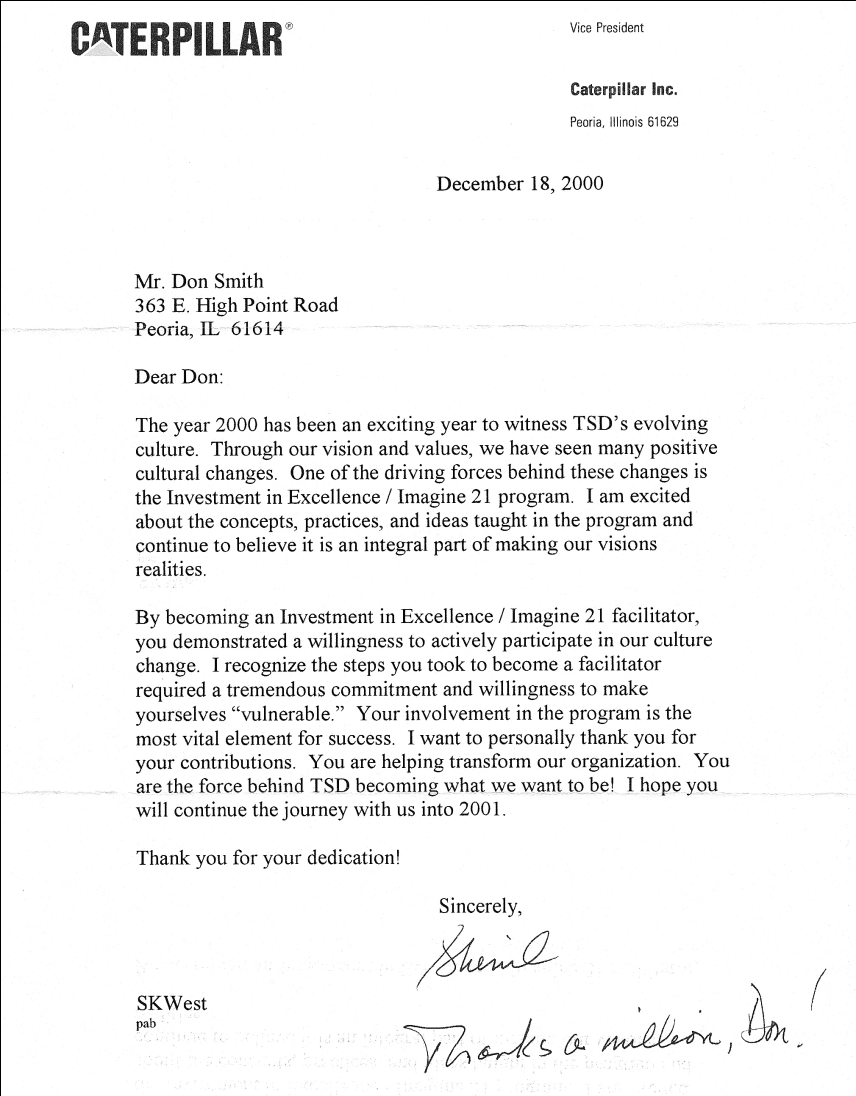
What a great last three years I enjoyed before retirement at age 65! The lessons I had spent a life-time learning had been reinforced by a program I had just attended called “Investment in Excellence”; it was timed perfectly to give me confidence and a great sense of freedom and openness about how to manage this group of people. I had no illusions that I could do the work that they were doing. If you have seen the TV program “Undercover Boss” where the boss gains enlightenment about the value of individuals in his organization, I was that person, but I was already “enlightened!” In my introductory remarks I described my role with a simple equation: p=P-i. I explained that each person’s performance (p) represented their potential (P) minus the interferences (i) that got in their way, and my job would be to remove their interferences to the best of my ability.
One example: The division had tried but failed to achieve what was an important and prestigious status called Office Area Certification that meant clarifying all their processes, identifying all their customers and their suppliers; it was a complex discipline. In January of 1999 I had everyone fill out order blanks for some very nice warm winter nylon jackets with liners with our Division name on them that were about $70.00 each (above the $50.00 limit on prizes, etc., per person that was allowed, but I did it anyway). I explained that these jackets were their reward for Certification.
“But wait! We haven’t come close yet!” they exclaimed.
“But I see it as good as done,” I said, “so let’s celebrate!”
What’s the deadline?” they asked,
“By September 22,” I replied.
“Where did you come up with that date?” They asked.
“That’s my birthday.” I explained.
So they formed seven different teams representing our seven areas of technical services and went to work. I would drop in on their meetings occasionally; on two occasions they asked me to help them get the cooperation they needed from several other departments. I dropped everything and got the results they needed in short order. They slipped past the September 22 date into November before we were finally awarded Office Area Certification, but I took great pride, as did everyone else, when we made our presentation to the vice President. Salaried personnel who had never had an audience with the Vice President made most of the presentations. The risk to me was negligible because their pride in accomplishment and their enthusiasm made up for any shortcomings in the presentations.
When I finished my career at Caterpillar in 2001 with forty one years of service, I had probably missed fewer than forty-one sick days total, for which I’m lucky. The lives I touched, the people I worked with, and the products and problems I had the great opportunity to work on have given me a wealth of good memories. I reflect back on those forty one years which went by so rapidly with great satisfaction and pride.