The First Home
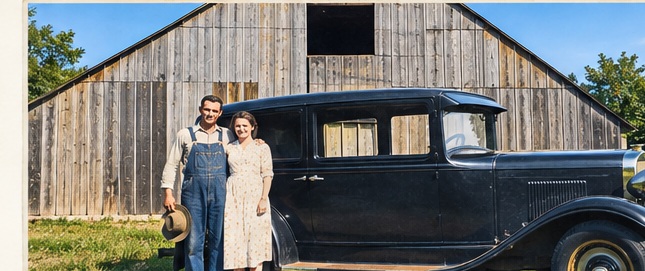
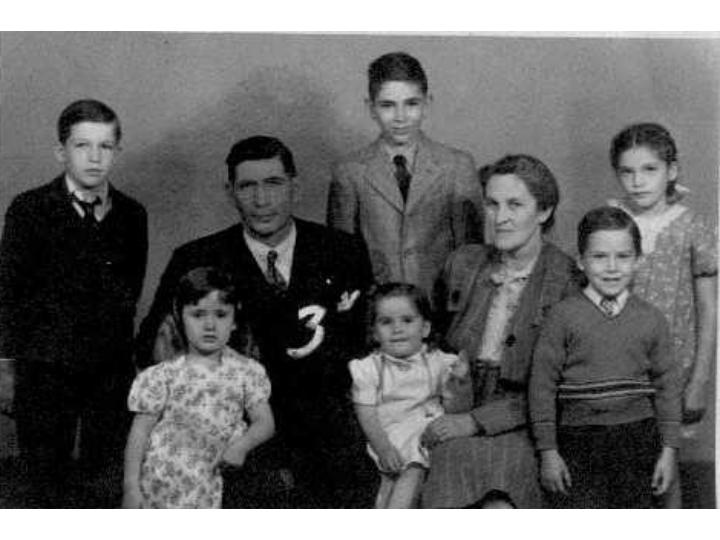
My parents were married in June of 1933. After the church ceremony they were invited by my mom’s Aunt Ollie to her home to enjoy a lunch prepared for the wedding party and some friends. Then they drove to the house that would be their home for the next fourteen years and seven children. Six of us are still alive; Charles at the age of eight months. I will say more about him later. Bernard died
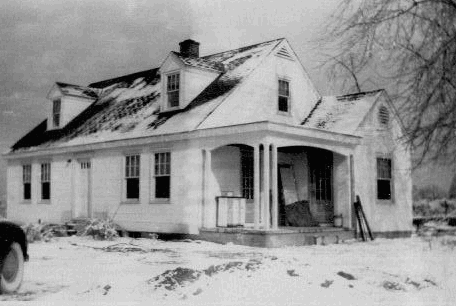
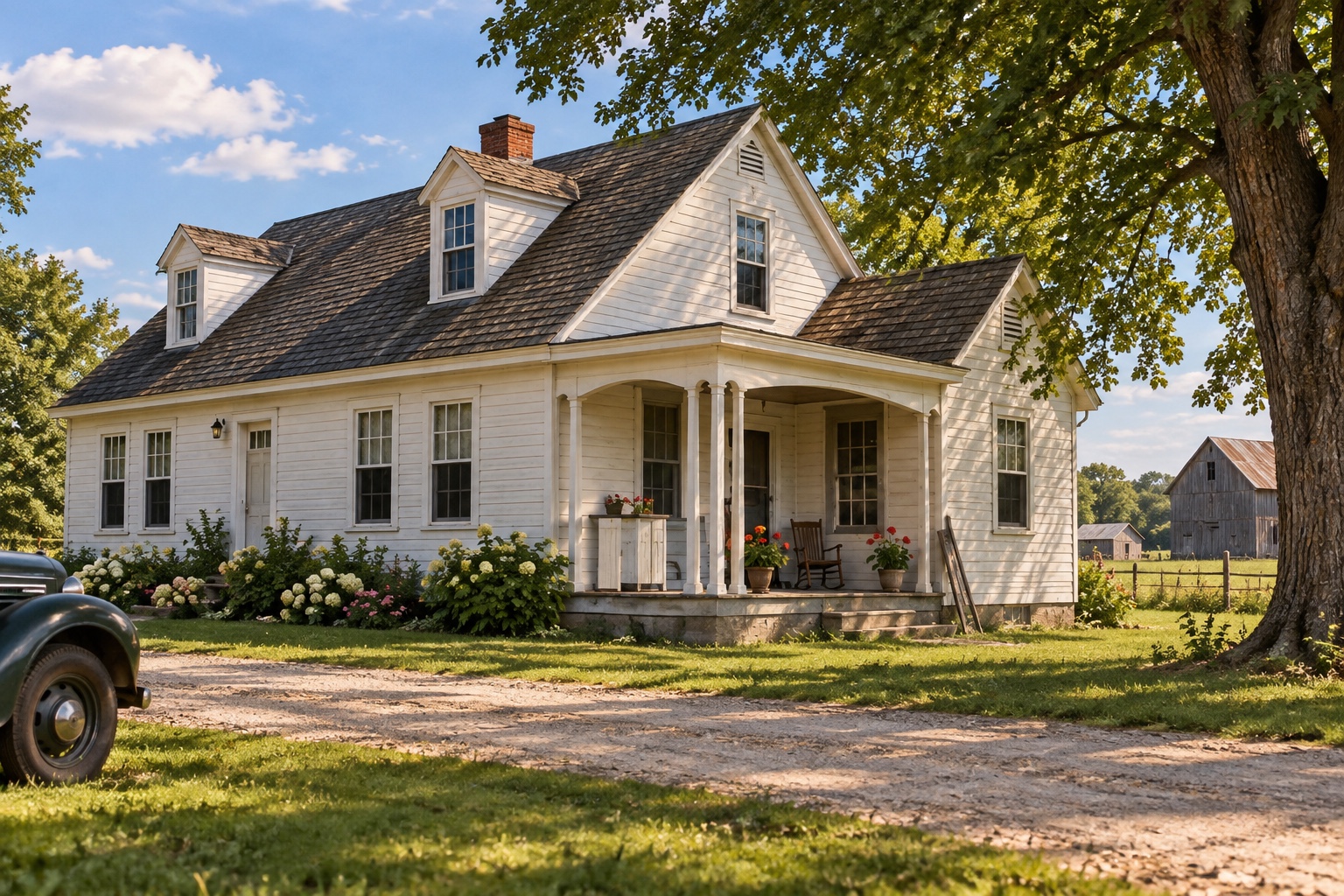
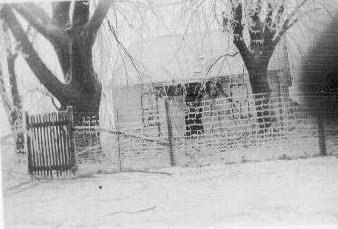
We lived on a farm in Pike County in western Illinois. Our home had a kitchen, an unheated porch off the kitchen called a summer kitchen, a front room, and two bedrooms. This small, unpainted house was sheltered by a giant maple tree in the front yard to the west, between the front porch and a gravel road. We kids would hide behind that tree when we heard a car coming, peeking around the tree and inching around it to stay hidden from view as the car drove by.
A gravel road defined the front or west side of the yard. Other boundaries were a lane from the gravel road on the north side of the yard and a hedge along the south side. The hedge was a line of giant Osage Orange hedge trees that taught me to watch out for thorns at an early age, since I was barefoot most summer days. The house was small and we were poor, but to me those realities were no big deal. Most of our neighbors were in the same situation. We grew up in this “sharecropper” house with no electricity or running water in the midst of the Great Depression and then the Great War. This was simply the way the world was when you were five years old and watched the grown up folks listen intently to the radio and discuss world events that seemed so serious.
Life Around the House
The house contained two sources of heat: a cook stove in the kitchen that we used the year around, equipped with a boiler containing hot water for washing, and a Warm Morning (that was the brand name) stove to warm the front room in the winter. Coal oil lanterns provided light. They would constantly flicker, sending shadows around the kitchen or front room in random patterns that were part of every night. I remember Dad bringing home a Coleman (brand name) lamp that he was very proud of. It produced a brighter light that was also very steady - no more flickering shadows. We endured measles and whooping cough and many bouts of flu and colds in that home.
The little house was battered by storms and barely held out the cold in the winter when Dad would fill the old Warm Morning stove with a combination of coal and hedge logs until the lower body of the stove glowed orange. No one ever got burned. We were taught to respect that stove at an early age. We had a battery-powered radio until batteries were no longer available during the last two years of the war. Dad subscribed to the Quincy Herald Whig and the St. Louis Livestock Reporter, so we had a newspaper connection to the world.
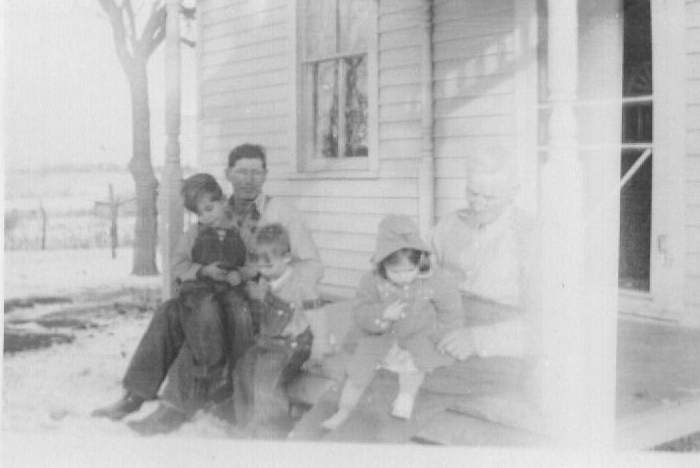
Grandpa Raftery & Margaret
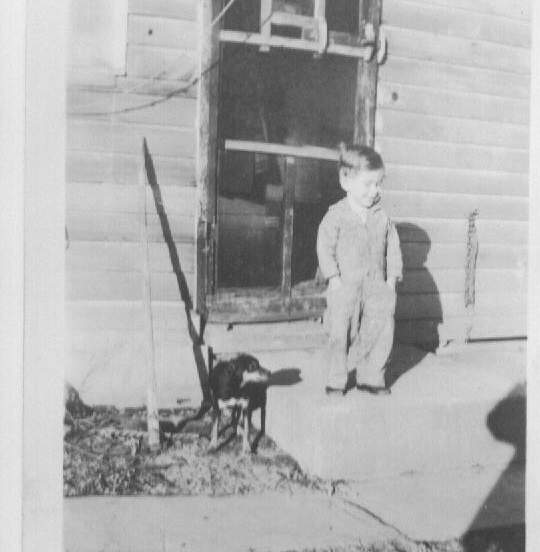
“OK, Donnie, we’re going to beat them this time,” my mom would say as we got dressed in the morning. This was a race to get dressed between my older brother John Edward and me. Dad helped John Edward and Mom assisted me. Dad always moved faster. While Mom would linger over fastening an overall buckle or putting on my shoes, my dad raced through the process. They always won the race, but I never really minded since the time that my mom spent devoting total attention to me was pretty scarce. For Mom there was always a baby to feed or some other household chores to perform.
& Rose Anne
Family
We had a mantle clock in the front room on a table beside the radio. I remember being made to take a nap one summer afternoon when I must have been sick. I slowly became aware of the sound of that clock. It started out as a very faint sound that could hardly be heard over the sounds from outdoors: a tractor in the distance, the hum of a million insects, sounds from the chicken yard, all blended and stirred together by the wind through the big maple. But slowly and steadily that clock started to raise its sound level bit by bit, or rather tick-tock by tick-tock, until I could no longer hear the outside world. I only heard this ominous and frighteningly steady, never ending tick-tock tick-tock that gathered more and more amplitude until it was like some living thing pounding against my chest! It caused a ringing in my ears that was going to drive me crazy like what happened to that old woman who lived up the road with the Austin’s when she was burned in a fire while cleaning a stove. I finally had to jump from the bed and race outdoors to find my mom in the garden with my grandpa Raftery (her dad, who was usually around), but I never told them about the dreadful spell that clock had tried to cast over me.
The house was small for a couple of children, let alone six. When I was six years old, the boys’ bedroom was moved to an unheated room under the eaves at the top of a steep and narrow stairs. The room contained a bed, a chest of drawers, and a small cot. John Edward and I shared the bed and our younger brother Lawrence slept on the cot. Snow that drifted in around the window in the winter did not melt. The only thing that I didn’t like about this was the cold of the sheets when getting into bed in the dead of winter. The three girls claimed a small bedroom downstairs.
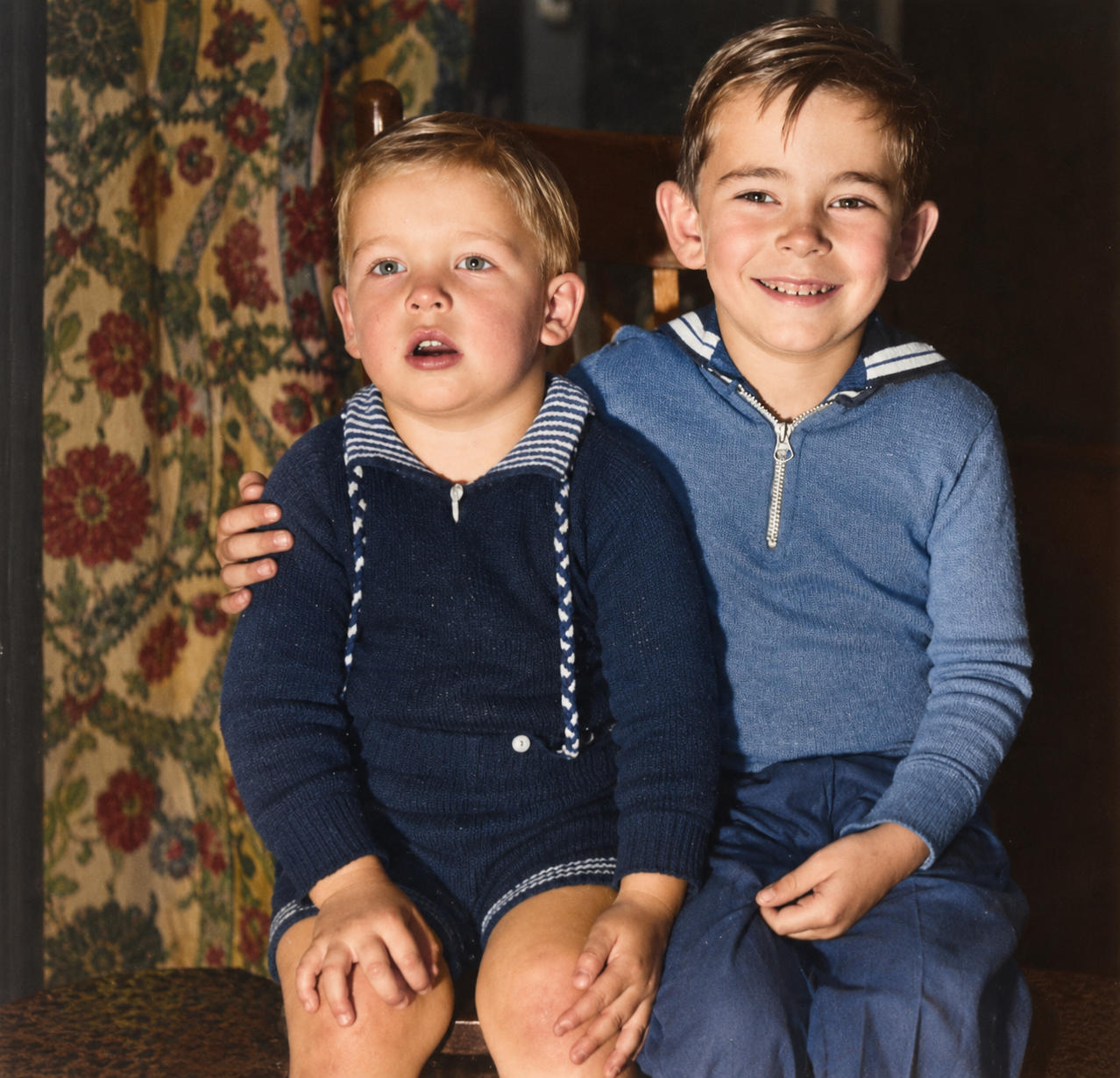
I was the second of the six of us, not counting Charles Bernard, whom we never knew. He had been born between John Edward and me, with spina bifida, so from the May morning when he was born until the December day he died, about all my folks could do was hold him and love him. I was born the following September. Later in life I realized I must have been conceived in the midst of their sorrow and grief. The summer of 1936 was the hottest ever, so when I was born in September of that year I must have been “well done”! We all have subjects relating to our parents that we think back on and wish we knew more about. The short life of Charles Bernard is one of those subjects for me. But my parents never mentioned him. That’s the way it was.
The World Behind the House
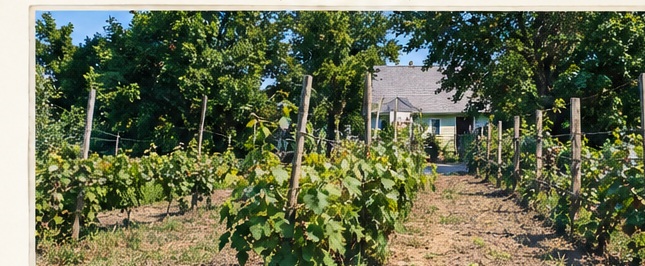
Behind the house the world stretched past a couple rows of grapevines, an outhouse, a cistern, a small coal shed, a granary that was later converted into a garage, and a barn. The cistern water was only for washing -- drinking water was carried from a spring in the woods beyond the barn. “Boys, you haven’t been to the spring yet, and it’s getting late,” my mom would admonish us. So John Edward and I would grab our water buckets and set out for the woods. We walked past the barn, down a path through a ravine in the cow pasture, and up the other side into the woods. The final part of our journey was a descent past some walnut and oak trees, and around some blackberry bushes to the spring. The spring was bordered on one side with planks that allowed us to kneel close and dip our buckets into the small pool of cold water that flowed into a stream which stretched through the pasture and beyond. It was a reliable source of water even in the worst years of the 1930s drought.
Dusk always seemed to descend to darkness faster than we had expected. The noises of the night included screech owls around the barn and a dog in the distance howling at the ascending moon or more likely at some unseen beast, ghost or dead person. Some sounds were likely coming from a creature that might have been stirred to life by our disturbance of their burial ground. Or maybe we were hearing the strange and blood curdling sounds of something getting ready to reach out and grab us by the throat. Our pace would hold steady through the cow lot, but as we walked past the barn and the light from the kitchen window came into view we knew that whatever was out there was about to make its move. So our gait would increase to a trot and finally a desperate race to survive as we hit the back door in full flight with at best a half-bucket of water apiece!
Sounds of Home
When we heard Mom singing, that was a good sign that her world that day was OK. “I’m looking over a four leaf clover,” “In the shade of the old apple tree,” “School Days,” and “There’ll be blue birds over the white cliffs of Dover” were among her favorites. She had been a schoolteacher and loved books and enjoyed reading to us. Our reward for getting into bed was that she would read to us from a book or sometimes from a serial running daily in the St. Louis Livestock Reporter.
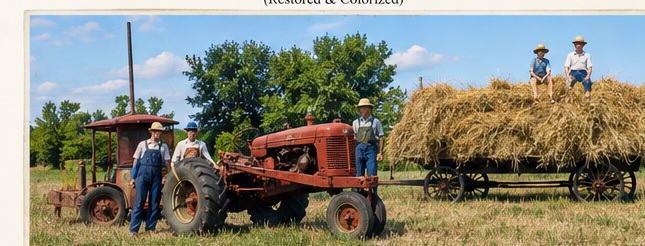
Dad was a farmer who in these early days was a renter before he became a farm owner. My best feeling of security would come on those long spring evenings when we could finally open the windows to the outdoors and let the spring sounds of frogs croaking and other indistinguishable night sounds drift in. Dad would be working late on the farm that he rented two miles away. I’d lie awake and listen for his return. The sound I waited to hear was his tractor, an old Allis Chalmers Model 45, whose exhaust made a very distinct crackle. The moment he drove over the crest of the hill on the gravel road about a quarter-mile to the north, the sound of the tractor would reach me - and I’d be asleep before he arrived home. That was true security. I still like the definition of security as being a sound that lets you go to sleep.