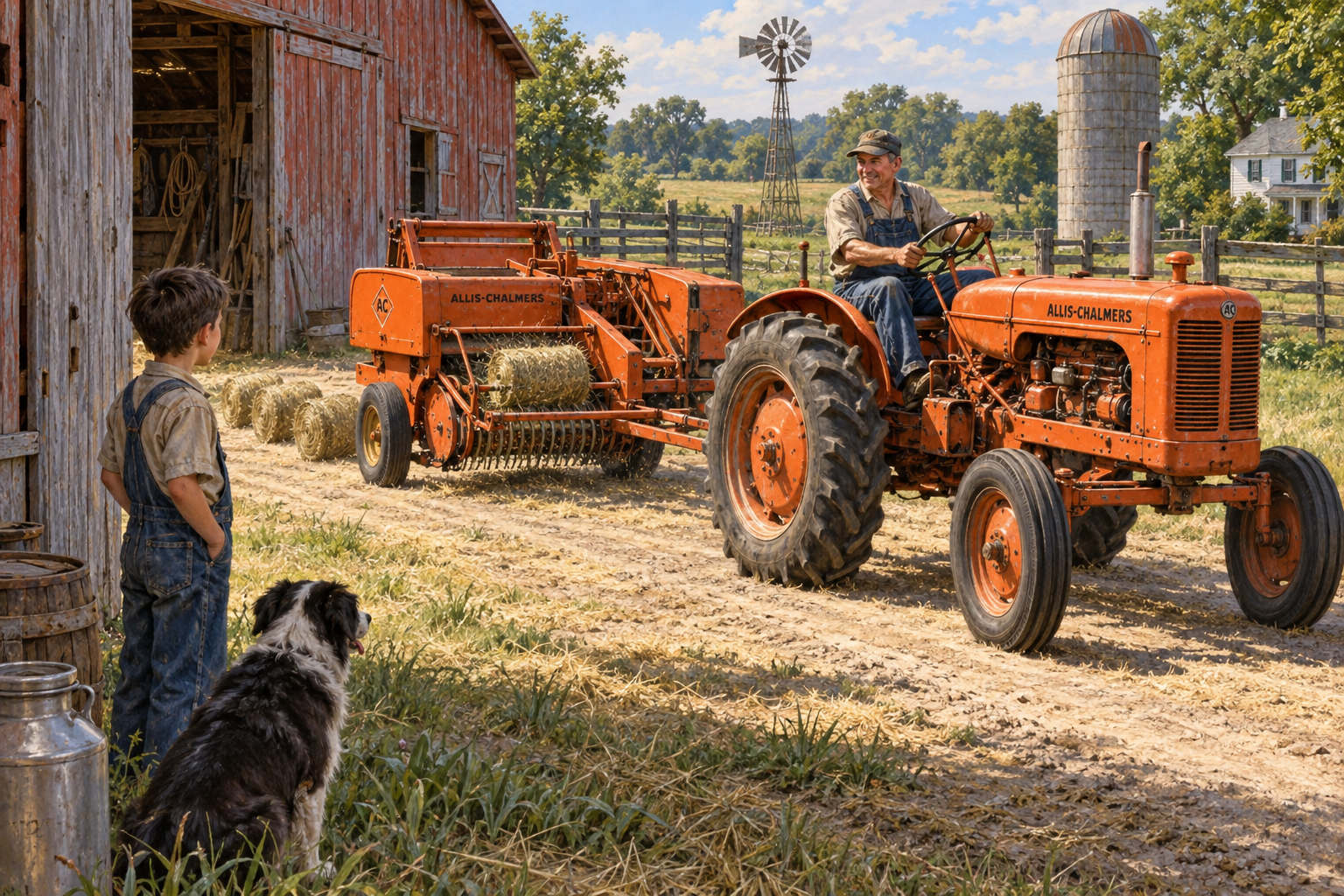
Three of the five subjects that are “top-tier interests” to me are history, current events, and writing. I like reading about our founding fathers; any history book by David McCullough is welcome. For current events I subscribe to the Journal Star, watch the nightly news, and read many magazines. Writing is very rewarding and really stretches me, but I still need discipline to do it with dispatch. I have a lot of secondary interests, the ordinary activities that fill my days. Golf, gardening, hunting mushrooms in the spring, exercise, playing poker, lunch with a friend, phone calls, a daily Sudoku puzzle, reading, computer e-mail… these second tier interests fill the cracks and crevices of my days.
Two more “top-tier interests” are special, part of my DNA, they define me. First is my family, and second is my lifelong interest in how things work: technology, science, engineering, and trying to keep up with the “computer experts” (my sons). These are the subjects that I’m most likely to think about if I wake up in the middle of the night.
The broad subject of family will be parceled into other short stories. Regarding that second part of my DNA, I’ve always had an interest in mechanical things and scientific subjects. My education, my subsequent career at Caterpillar, and my ongoing efforts in retirement to keep up with technology reflect this interest. So the subject of this story is how that interest started during my life on our family farm.
When the Allas Chalmers brand “round bale” baling machine came on the market in 1947, Dad bought the first one arriving at the dealer. That first model still had some bugs to work out, and that was about when (and part of why) my interest in the design of machinery and engineering in general surfaced. I just had to figure out how that mysterious contraption worked.
Shown in pictures on the next pages, this machine produced the relatively small (sixty – eighty pound) “one-man” round bales that replaced the larger rectangular bales that had been produced for many years. The huge round bales you see along the sides of fields today that take a lift truck to move came along later. These bales were about twenty four inches in diameter and three feet long, as shown in the pictures. Conventional hay baling machines that produced the rectangular bales took at least three men to operate. This new machine turned the process into a one-man operation. This change in the way we did things - using the round baler - was brought about simply because one person could now do the work of three.
The heart of the hay baler was two sets of belts that operated like two mechanical hands rolling the hay into a tight round bale. These two sets of belts ran in opposite direction. Imagine rolling a piece of bread dough between your hands, with your palms facing each other but magically moving continuously in opposite directions, while someone introduced a steady supply of bread dough. This continuous motion was the basic operating principle of the new hay baler.
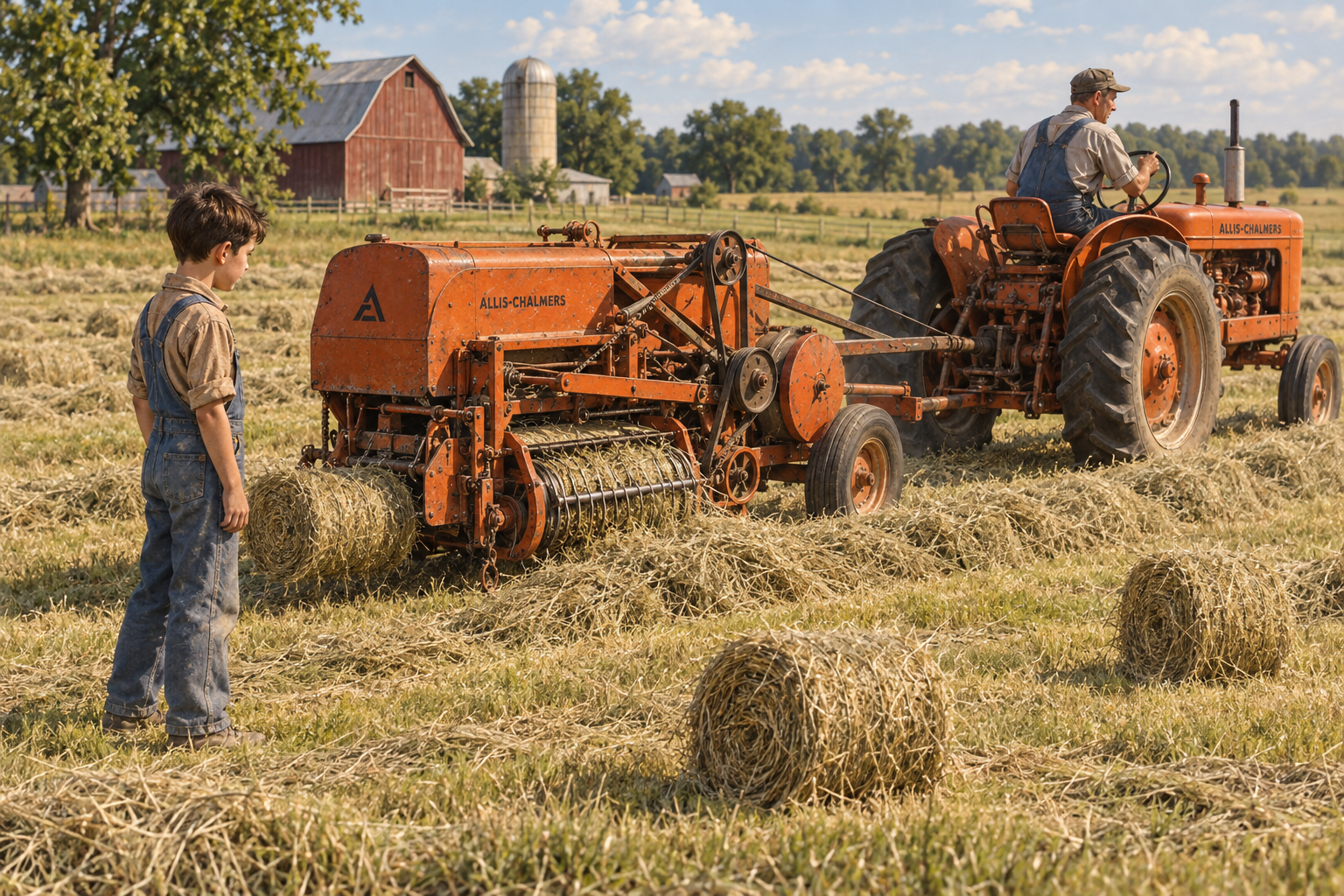
Bailing hay on our farm – A one-man operation replaced a large crew of workers.
As the hay entered the “facing palms” formed by the belts, a spring-loaded apparatus compressed the hay while permitting the belts to spread apart to allow the bale to grow in size. The spring-loaded belts kept pressure on the bale by the force supplied by a set of large springs that lengthened as the bale grew larger. At a predetermined bale size, the elevator that fed hay from a windrow on the ground up the apron (see photo) into the belts stopped, so no more hay entered. The operator paused the forward movement of the tractor when the elevator stopped.
At the moment the elevator stopped, a small but just the right length tubular arm containing a line of twine was tripped to fall down in front of the belts while the last piece of hay was still entering. From that arm dangled the end of a line of twine, which was caught by that last piece of hay being drawn into the belts and onto the bale. As the twine was fed around the spinning bale, a drive swung the hinged arm back to its original position, causing the twine to wrap around the bale from one end to the other.
As the arm returned to its original position, the taunt line of twine contacted a sharp blade which cut the twine, and another mechanism attached to the twine-cutting blade moved slightly to trip a latch. That latch mechanism allowed a set of belt rollers on the back of the bailer to open momentarily, and the baler, like a hen laying an egg, would eject the bale onto the ground. The rollers promptly snapped shut, the elevator re-engaged, and the next bale began to form as the operator drove the tractor forward.
A family event in 1947
I loved that crazy Rube Goldberg machine and could walk beside it for hours, watching various parts of the baler work. I’d come home with sunburns and mosquito bites that I’d never even noticed! Every lever, rod, gear, spring, roller, and moving part contributed to the hay-baling process at the right moment. I watched, over and over, until I gradually understood how it worked. It was a great feeling.
I suddenly possessed a unique and valuable gift, because this first generation version was under-designed, meaning it was simply not robust enough to take the continual beating that it inflicted on itself. The moving parts vibrated out of position, bent, wore out, and shifted until suddenly the arm containing the twine wouldn’t drop, or the rollers wouldn’t open to eject the bale, or the elevator wouldn’t re-engage, or the belts would jam… all kinds of bad things happened.
Part of my learning process was repairing, not just watching. In time I became expert at keeping the bailer working in tip-top shape. Next season more of these bailers were put to work on neighboring farms, and I acquired a reputation for being able to repair and readjust them; consequently, I was called on to do so on several occasions.
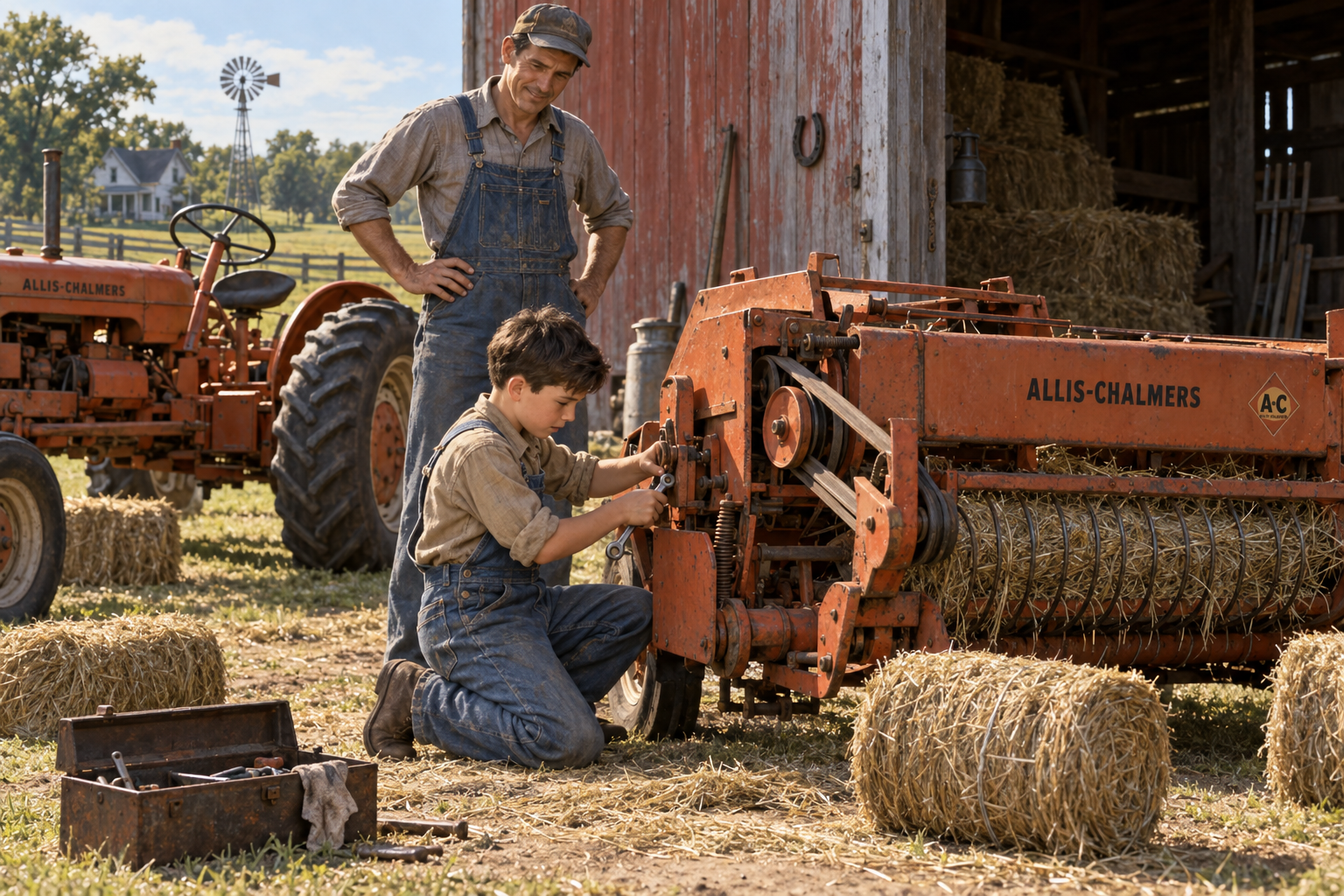
I went on to study engineering at the University of Illinois and spent a technical career at Caterpillar… subjects for other stories. Today I realize that I’ll never know what’s going on inside a computer like I understood that old baler.