A New Assignment
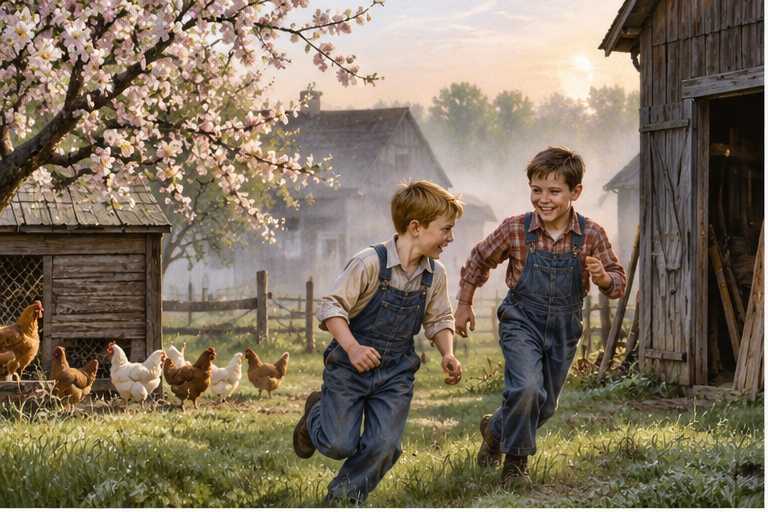
My brother John Edward and I began that May morning with our shoes on. Little grey ghosts of fog were still silently playing hide and seek around the plum trees by the chicken house when we chased each other out to the barn lot, but the sun soon sent the ghosts into hiding. The fragrance of the plum blossoms lost its contest with the smell of the chickens as the day warmed. Dew lingered on the grass until a breeze came by and gently wiped each blade. Shoes were the order of the day from Mom. Her anxious expression revealed that she was not as excited as we were about this morning’s adventure. “John, are you sure they can keep up for the whole morning?” she asked. Dad dismissed her concern with a shrug. “Well, if they take turns, they’ll spend half their time resting. I’ll know if they need to rest a spell.”
This was going to be a new and different assignment for John Edward and me; we were going to help plant corn! Or more exactly, we were going to help our Grandpa Smith plant corn. That spring of 1945 I was almost nine years old and John Edward had just turned eleven, so we were anxious to help Dad and Uncle Loren and Grandpa Smith finish the corn planting that should have been done by now. It was still May but it was late May, and the neighbors had finished planting last week.
Planting in a Checkerboard
In 1945 the practice of cultivating the fields of corn to keep the weeds (ragweed, cockleburs, button weeds, giant foxtail, jimson weeds, and smart weeds) under control was essential. The weeds quickly claimed the space between the corn plants, and the healthier and more plentiful the weeds became the more the corn was stunted. So, the planting strategy was to hill drop, not drill the seeds into the ground like today’s practice. Hill dropping resulted in a checkerboard pattern that allowed cultivation of the corn (when plants were about two feet high) not only in an “east and west” direction but also in a “north and south” direction. This planting method, to accommodate cultivation in both directions, meant that the forward direction of the rows had to be straight, and the hills of corn had to be aligned to the right and left as well.
The corn planter sliced a furrow and dropped the kernels of seed into it when the long planter wire that stretched across the field tripped the planter mechanism. As long as the planter wire with its “buttons” that tripped the planter was positioned correctly at each end of the field, the result would be hills of corn placed in the required checkerboard pattern.
The Old Team Returns
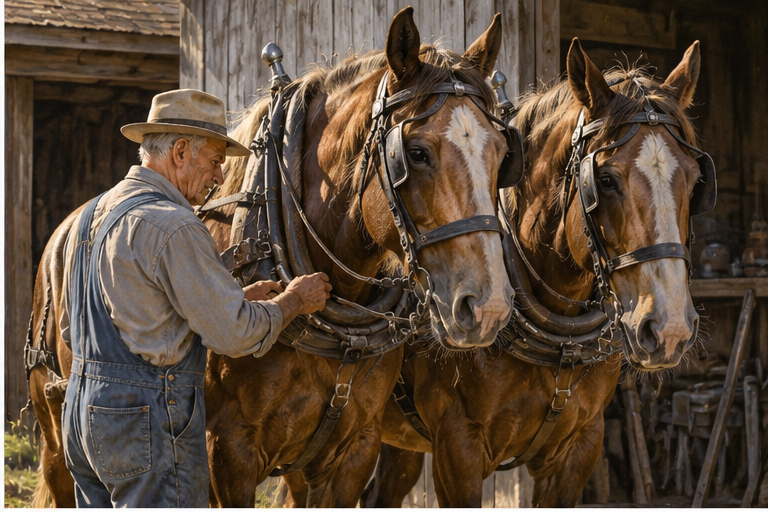
1945 was the last year we employed a horse-drawn planter. So, our old team of horses was taken out of retirement for the last time that spring. I’ve forgotten their names. Workhorses had always been such a part of every farm environment up until that time that they were given names. Our retired team had been content to stand beside each other in the pasture and watch as the cows had to report for duty each evening, but now it was their turn. They looked around nervously as Grandpa Smith tightened their harness into place. Grandpa Smith never had much to say to John Edward or me, but his soft murmurings had a calming effect on the horses. The smell of the harness was a mix of dusty granary and old leather; the harness was stiff in its joints from hanging too long in one place.
The real problem was that Grandpa Smith was coming out of retirement too. He had been recruited to ride the planter and steer the horses, as the urgency to finish planting had escalated with June close at hand and rain in the forecast. Dad was going to be operating his Allas Chalmers tractor, disking the plowed ground. Uncle Loren was on his Minneapolis Moline tractor dragging a harrow to smooth the disked ground; the final preparation of the seedbed. That left Grandpa to operate the planter, and that was where John Edward and I came into play.
The Boys Become the Guide
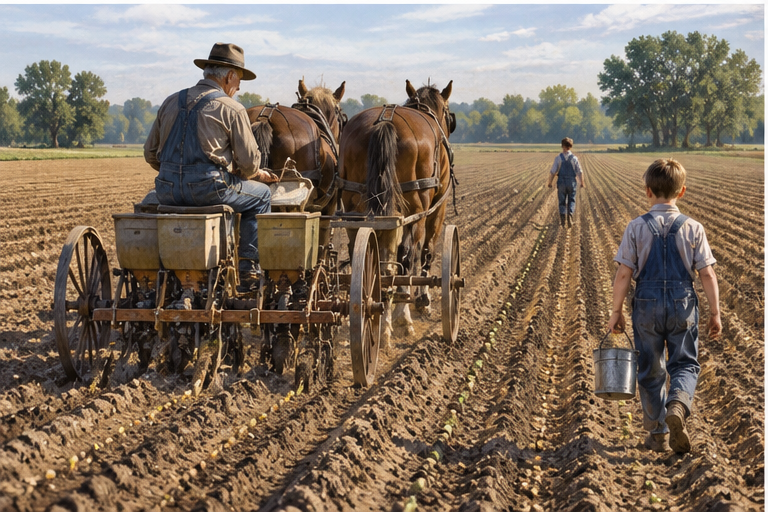
Grandpa could manage a team of horses by instinct, no problem, and these horses were docile anyway. But his eyesight had deteriorated. He couldn’t see the line to follow that an outrigger on the planter scribed in the soil as it traversed the field. Plus, he couldn’t keep climbing off and on the planter at the end of each row to reposition the planter wire, so we were to reset the planter wire at the end of the field as Grandpa turned the team and planter around. Another critical job was to replenish the planter’s seed compartments when they became low. The cardinal sin would be to let the planter run empty of those precious gold pieces of seed corn.
But our number one assignment was to be the target that Grandpa could sight on as he steered the team back and forth across the field. We were to take turns walking the line scribed by the planter’s outrigger arm during the previous pass across the field that defined the centerline for the next set of rows. So, the straightness of the rows, which farmers took pride in, was going to be in our hands (in our feet actually).
Across the Field
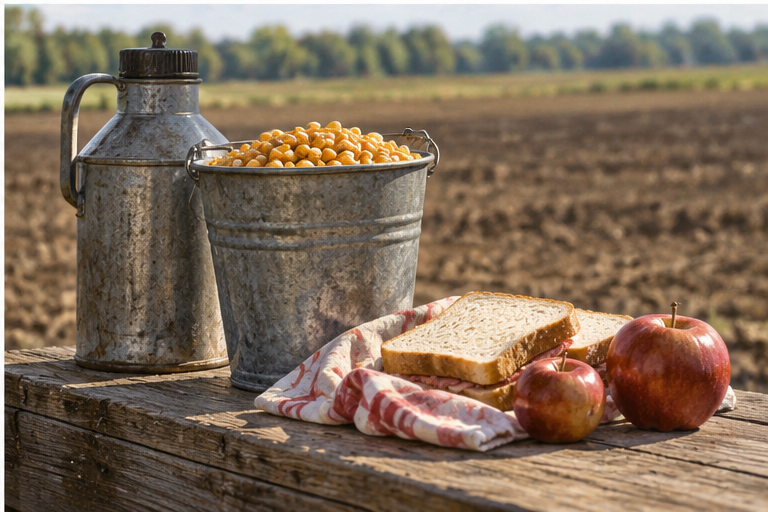
Mom suppressed her impulse to cite some kind of a child labor law to prohibit this adventure, but instead supplied us with a jug of cold water to share and some sandwiches for mid-morning. She polished a couple of apples with the corner of her apron and said “Keep your shoes on, so your feet stay dry and won’t get so tired. You can’t afford to cut your foot or stub your toe.” She knew that our feet would be the critical success factor for our morning’s work. If all went well, Dad would take over from Grandpa in the afternoon and we would be relieved of our duties.
The plodding pace of the old team was easy to match. The world was fresh and green and the air was filled with the sweet pungent smell of the earth. The sound of mourning doves in the distance blended with the soft slap and squeak of the harness and the click of the planter wire as it tripped the planter mechanism. The new-leaf green hedgerow that formed the eastern side of the field provided us with shade and attracted a breeze. The grass beneath the hedge was great to lie in and rest our legs. We took turns walking west toward the gravel road that formed that border of the field, repositioned the planter wire, and turned to walk back east to rest in the shade of the hedgerow. As time went on the crackling sound of Dad’s tractor and the hum of Uncle Loren’s tractor softened into the distance, so that meant they would finish by noon, and we would too. So, for the last hour we took off our shoes to enjoy the feel of the warm spongy soil under our feet and between our toes as we marched to the cadence of the planter wire.
We Conquered the Assignment
We survived. We did better than that; we conquered the assignment! We ran out of water and ate our sandwiches too quickly, but experienced a sense of worth and a large amount of self-esteem that came from knowing that we had made a real contribution to the farm’s operation at a critical time. We felt great pride in knowing that Dad trusted us to handle such a big assignment. Since I’ve been more of a plodder than a sprinter through life, I suspect perhaps it started that May morning plodding in front of those horses.