I recently read an article in the Wall Street Journal about the importance of reading out loud to young children. The article suggested that reading out loud to someone... not just your young children... someone like your spouse, a friend, or the elderly... could positively affect you as a reader. And the column in the WSJ suggested that the listener – whether child or adult – would benefit in many ways. The article's author was Meghan Cox Gurdon, who recently published her book entitled The Enchanted Hour – with the sub-title: The Miraculous Power of Reading Aloud in the Age of Distraction.
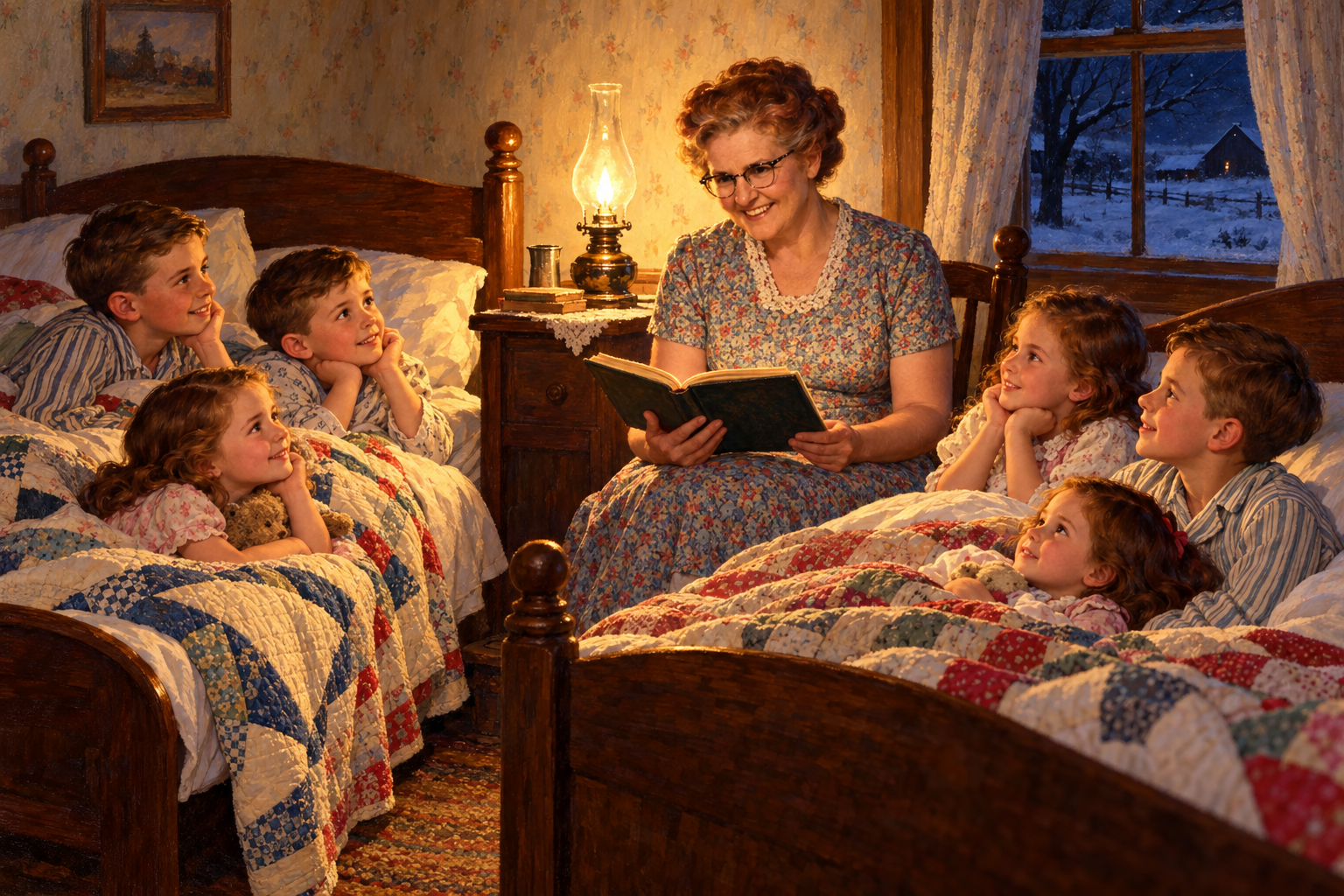
This reminded me of an important element in my life growing up; our mom’s practice of reading to us once we were all in our beds... all six of us... and just about every night. I must explain that in the 1940’s (at least through 1947), we lived in a small farmhouse without electricity or running water. There was a complete absence of distractions like TV or electronic devices; no radio either. For those of us in school, there were textbooks, but nothing for the younger children.
Evenings on the farm were usually uneventful... you might even say dull! We had to produce our own entertainment by playing cards, working on picture puzzles, and playing board games like Easy Money and Monopoly. We did our homework and read books that we checked out from the school library during the school year and from the Pittsfield public library in the summertime. We played checkers and card games like Euchre, 7-Up, Rook, Hearts, and Old Maid. We were careful about complaining that we didn’t have anything to do because Mom would solve that with some chore she would promptly assign to the complainer.
But the everyday (or every night) practice that we looked forward to was Mom reading to us. She didn’t have to hurry us to get into our pajamas once we knew it was bedtime because this would become our “highlight of the day,” especially on many a long cold winter night.
This practice of reading to us was as enjoyable for Mom as for us kids. Mom had been a schoolteacher and had a love of teaching that translated into a love of reading that she shared with us daily. The sources of her reading were books from the library in town, some books that she had collected over her time before marriage and family when she was going to school or teaching in one of several one-room country schoolhouses in the 1920s.
My memory of the books she read to us is clouded by time, but two come to mind; the first is Romona an American novel by Helen Hunt Jackson. I’ll rely on a description from a website regarding the novel since my memory doesn’t serve me well: “Set in Southern California after the Mexican–American War and the annexation of the territory by the United States, Ramona explores the life of a mixed-race Scottish–Native American orphan girl. The novel's influence on the culture and image of Southern California was considerable. Its sentimental portrayal of Mexican elite colonial life contributed to establishing a unique cultural identity for the region.”
For some reason, I remember the opening line of that novel: “It was sheep-shearing time in Southern California, but sheep-shearing was late at the Señora Moreno's.” Now, why my brain with no cells to spare would remember that opening line I do not know.
I no longer remember the story, but I know that we were absorbed in the novel and couldn’t wait to hear the next chapter that Mom would continue the next night. This was our entertainment, but also a basic way that the outside world entered into our consciousness.
Another novel from Mom’s collection was about the life of the early Christians; the title was also one word; Fabiola. I can’t remember anything but the title. Mom kept that book after she read it to us for many more years as a part of her collection of favorite books. Here is a website description: “Fabiola is a captivating novel written by Cardinal Wiseman that takes readers on a journey through the Church of Catacombs. The book tells the story of Fabiola, a young beautiful woman from a noble Roman family who converts to Christianity and becomes a nurse, caring for the sick and the poor. The novel is a perfect blend of history, romance, and spirituality.” I don’t remember the spirituality part.
Those are two of the many books that Mom read to us. The second major source for the novels and stories Mom would read came from chapters of ongoing serials parceled out daily in the Saint Louis Daily Livestock Reporter, a newspaper published in the 40’s that Dad subscribed to. The names of the stories are not important, and I have no way of finding copies of the paper from that era in the paper’s archives.
The absorption of these newspaper novels spread out over a month or two helped develop the imagination or creative side of our brains as much as the books did. Envisioning the circumstances and settings and characters and dialogue of each scene in every day’s offering was left to our imaginations. Themes of these novels included westerns, mysteries, and adventures. Some scenes were so funny that Mom couldn’t keep from laughing as she read, and Dad would join in. Dad was also an avid listener and enjoyed the evenings of her reading along with us kids
One special reward associated with this practice was the family closeness that we shared listening to Mom. We could let our imaginations soar to capture every character and paint every scene. This practice certainly helped us ease into sleep. This is one of the good memories of my childhood.
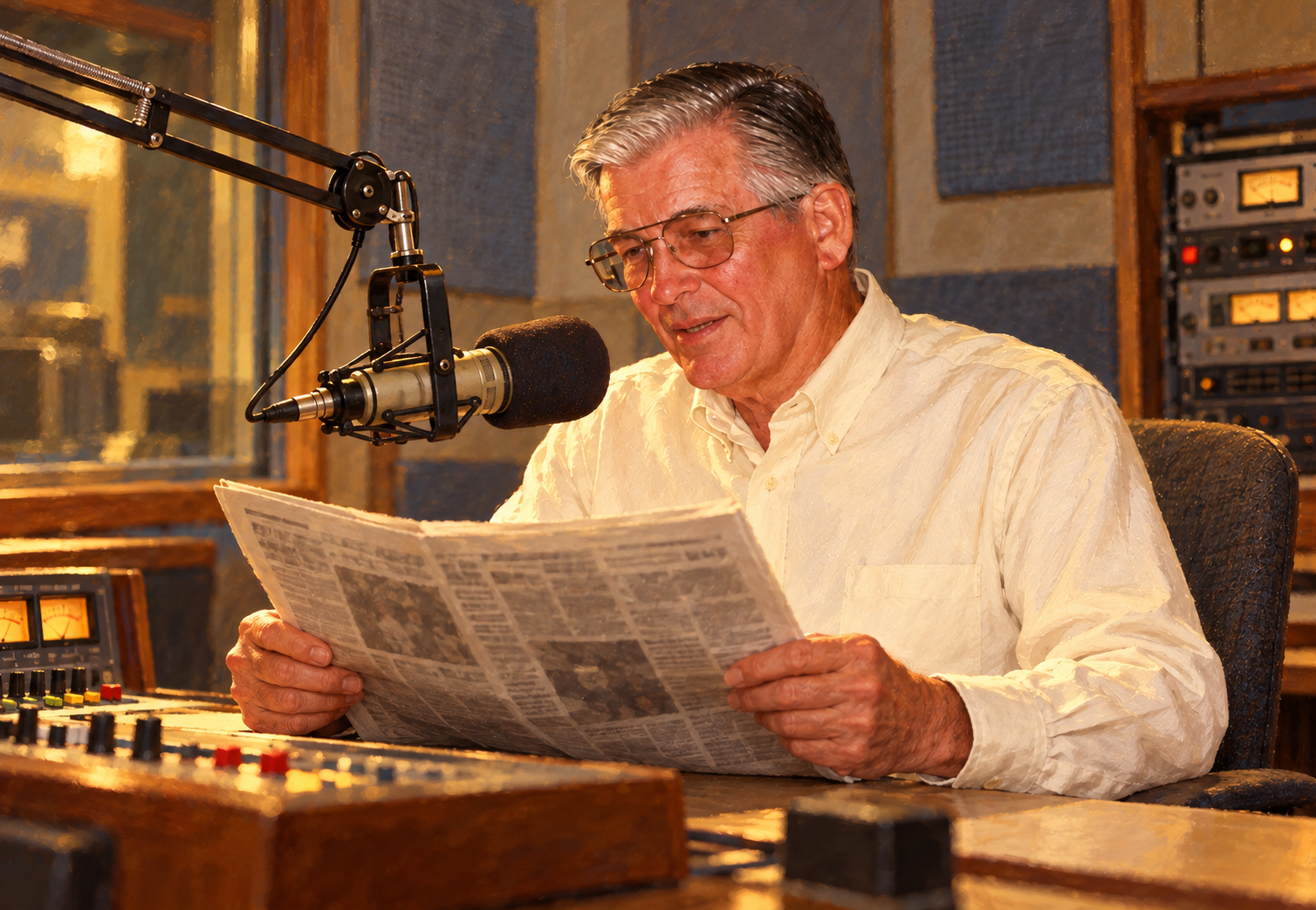
Many years later, I practiced this with our kids, but not to the degree Mom had done. Then at some point years ago, I accepted an invitation to read to the blind and visually impaired over the WCBU local public radio station; I volunteered for an hour once a week. I looked forward to this practice, but reading from the newspaper never provided a great degree of gratification... but who knows, perhaps some listener remembers that years-ago service by WCBU fondly... I’ll never know.